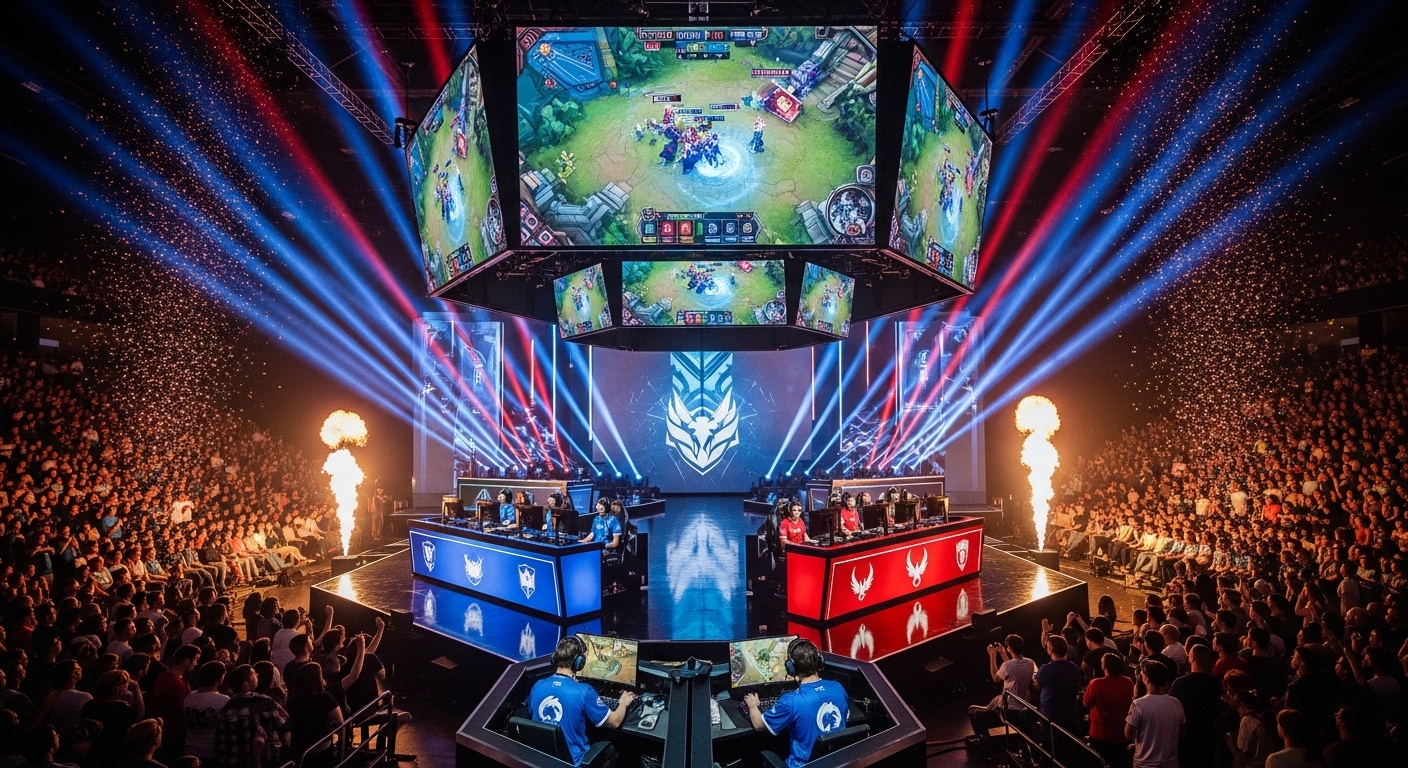
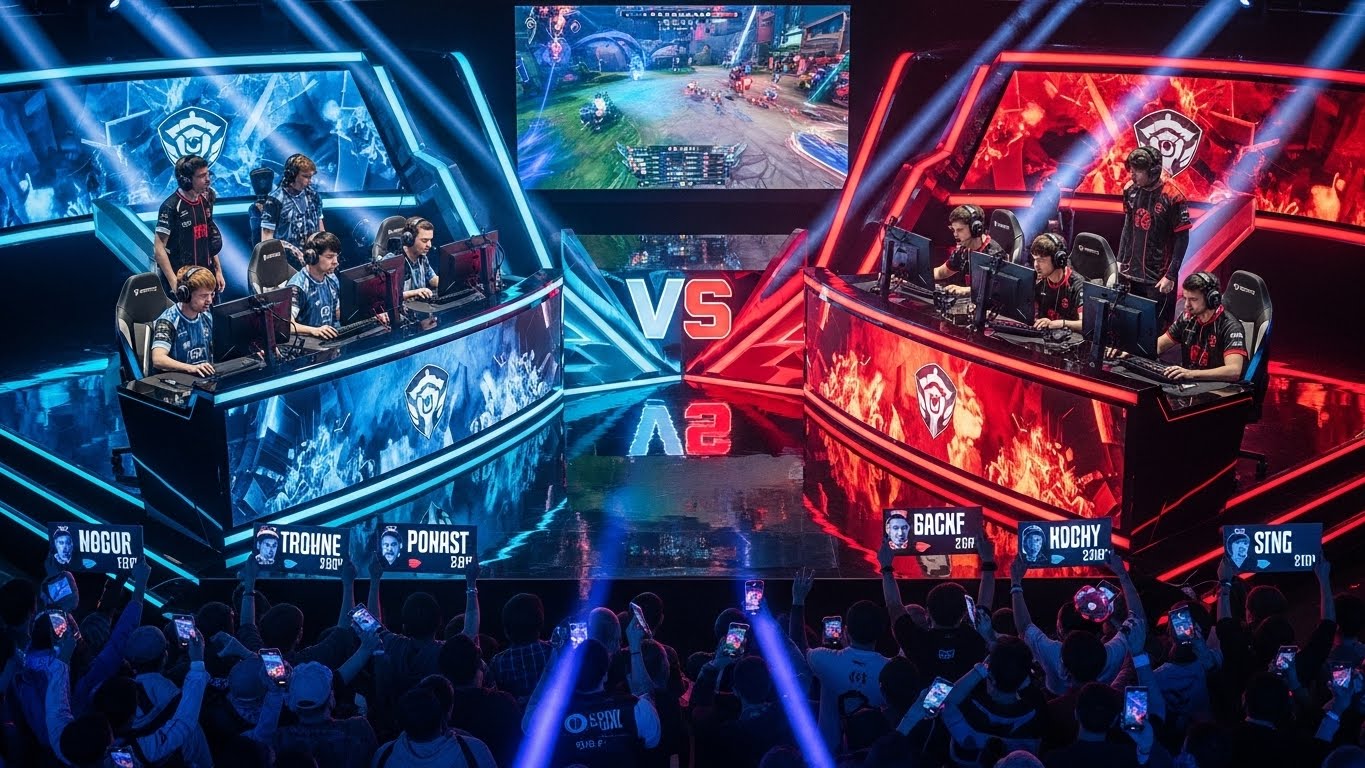
Esports, once a niche hobby for a select group of passionate gamers, has evolved into a global entertainment powerhouse. What was once a pastime enjoyed by a few has grown into a billion-dollar industry with professional leagues, sponsorships, and millions of fans worldwide. Whether it’s watching League of Legends tournaments, cheering for your favorite Dota 2 team, or tuning into the Fortnite World Cup, esports has become a major force in both the gaming world and mainstream entertainment.
In this blog post, we will explore the rapid rise of esports, its impact on the gaming community and beyond, the factors driving its success, and the future potential of this dynamic industry.
What is Esports?
At its core, esports refers to competitive gaming where players, either individually or in teams, compete against each other in organized video game tournaments. Esports can encompass a wide range of games, including real-time strategy games like StarCraft, multiplayer online battle arena (MOBA) games such as League of Legends, first-person shooters like Counter-Strike and Call of Duty, and battle royale games such as Fortnite.
Unlike casual gaming, which is often about playing for fun, esports involves high levels of skill, strategy, and coordination. Professional esports players train for hours, just like athletes in traditional sports, and compete in tournaments that are often broadcast to a global audience. Some events attract millions of viewers both in-person and through live streaming platforms such as Twitch, YouTube Gaming, and Facebook Gaming.
The Origins of Esports
The roots of esports can be traced back to the late 1990s and early 2000s, when online multiplayer games began to gain traction. Early competitions revolved around games like Quake, StarCraft, and Warcraft, where players would compete in local or regional tournaments. The first major esports event, The Red Annihilation Tournament, took place in 1997 and featured the game Quake. The event offered a car as the grand prize, an indication of how serious competitive gaming could become.
By the early 2000s, the rise of Battle.net, the online platform for Blizzard Entertainment’s games like StarCraft, provided a new way for players to compete globally. The launch of ESL (Electronic Sports League) in 2000 further established the idea of organized esports tournaments with a professional structure. The early 2000s also saw the emergence of Twitch, which allowed gamers to broadcast their gameplay and build a community around their skills.
While esports initially existed as a niche activity, it began to explode in popularity during the late 2000s and early 2010s. With the rise of League of Legends and Dota 2, competitive gaming found a massive audience. This period marked the transformation of esports from grassroots events to large-scale tournaments with significant prize money and sponsorships.
The Growth of Esports: A Billion-Dollar Industry
Esports’ rapid growth is not only reflected in its audience size but also in its economic impact. What was once a hobby is now a multi-billion-dollar industry. According to industry reports, the global esports market is expected to generate over $1 billion in revenue by 2023, driven by sponsorships, media rights, advertising, and merchandise sales. The rise of esports has also led to new career opportunities, with professional players, coaches, analysts, broadcasters, and event organizers all benefiting from the booming industry.
Sponsorships and Partnerships
One of the key factors driving the success of esports is the increasing investment from brands and corporations. Esports has become an attractive avenue for sponsorships because of its large, young, and tech-savvy audience. Companies like Intel, Coca-Cola, Nike, and Red Bull have partnered with esports organizations and tournaments to reach this demographic. These sponsorships not only provide funding for teams and events but also help to legitimize esports as a mainstream form of entertainment.
Major gaming publishers, such as Riot Games, Valve, and Epic Games, have also invested heavily in developing professional leagues and tournaments for their games. Riot Games’ League of Legends World Championship and Valve’s The International for Dota 2 are two of the biggest esports events in the world, drawing millions of viewers and offering prize pools in the tens of millions of dollars. These events are just a glimpse of how serious esports has become as an entertainment industry.
Streaming and Content Creation
Another key driver of esports’ growth is the rise of live streaming. Platforms like Twitch, YouTube Gaming, and Facebook Gaming allow players to stream their gameplay to a global audience. This has created a new form of entertainment where fans can not only watch their favorite players but also interact with them through live chat, donations, and social media.
In fact, many esports stars have become household names thanks to streaming. Professional gamers like Ninja, Shroud, and Pokimane have amassed millions of followers, earning money not only from tournaments but also from sponsorships, donations, and subscription revenue. This shift toward streaming has opened up a new revenue stream for players and has contributed significantly to the expansion of the esports industry.
The Esports Ecosystem: Teams, Leagues, and Tournaments
The esports ecosystem is made up of several interconnected components, including professional teams, tournaments, players, and fans. Just like traditional sports, esports has a professional league system, with organizations and franchises competing at the highest level.
Professional Teams and Players
Esports teams operate in much the same way as traditional sports teams. They recruit talented players, hire coaches, analysts, and managers, and compete in national and international competitions. Some of the most prominent esports organizations include Cloud9, Team Liquid, T1, and Fnatic. These teams often compete in multiple games and are made up of players who specialize in various titles, such as League of Legends, Counter-Strike, or Overwatch.
Professional players in esports are highly skilled individuals who often practice for hours each day to hone their skills. The competitive nature of esports means that only the top players rise to the top, and many players are supported by sponsors and teams that cover their living expenses, travel costs, and tournament entry fees.
Esports Leagues and Competitions
In recent years, the structure of esports competitions has become more formalized, with many games now having official leagues and tournaments. The Overwatch League (OWL), for example, operates as a city-based franchise system, similar to traditional sports leagues like the NBA and NFL. Teams represent different cities, and matches take place in a professional environment with broadcast-quality production.
In addition to organized leagues, esports tournaments are often hosted by game developers or third-party organizers. For instance, The International for Dota 2 is organized by Valve and features one of the largest prize pools in esports. League of Legends has its annual World Championship, which is one of the most-watched esports events globally. These tournaments not only provide entertainment for fans but also offer substantial financial rewards for the players and teams involved.
Fans and Spectators
At the heart of esports is its fanbase. Esports attracts millions of viewers, from casual fans to hardcore followers who dedicate hours to watching live tournaments. Many fans also engage with esports through online platforms, following their favorite teams and players on social media, watching streaming content, and even participating in online betting.
Esports events often sell out stadiums, such as the Staples Center in Los Angeles, which has hosted the League of Legends World Finals. International events like The International have attracted tens of thousands of live spectators, in addition to millions of online viewers who tune in to watch the action.
Esports and Mainstream Acceptance
Esports has rapidly gained acceptance in mainstream culture, and its influence can be seen across various sectors of society. The industry has received recognition from governments, universities, and traditional media outlets.
Universities and Scholarships
Many universities now offer scholarships for talented esports athletes, helping to legitimize gaming as a viable career path. In fact, several institutions have created dedicated esports programs, complete with coaching staff, training facilities, and professional-grade equipment. Esports is even being considered as a potential Olympic sport, with discussions surrounding its inclusion in future games.
Traditional Media and Broadcasting
Esports has also attracted attention from traditional media networks. Platforms like ESPN and TBS have aired esports events, while television channels have begun to dedicate time to coverage of major esports tournaments. This growing exposure has helped esports gain legitimacy as a mainstream form of entertainment, rather than being seen as a niche activity.
The Olympic Debate
The potential for esports to be included in the Olympic Games has been a hot topic for some time. The International Olympic Committee (IOC) has acknowledged the growing significance of esports and has been exploring ways to integrate competitive gaming into the Olympic movement. While there are challenges, such as the diversity of games and concerns about gaming addiction, esports’ rapid growth has made its inclusion a real possibility in the coming years.
The Future of Esports
As esports continues to grow, the future looks incredibly bright. With technological advancements, such as 5G and virtual reality, esports will only become more immersive and accessible. The rise of cloud gaming and mobile gaming will also expand the reach of esports, allowing players to compete and fans to watch from virtually anywhere.