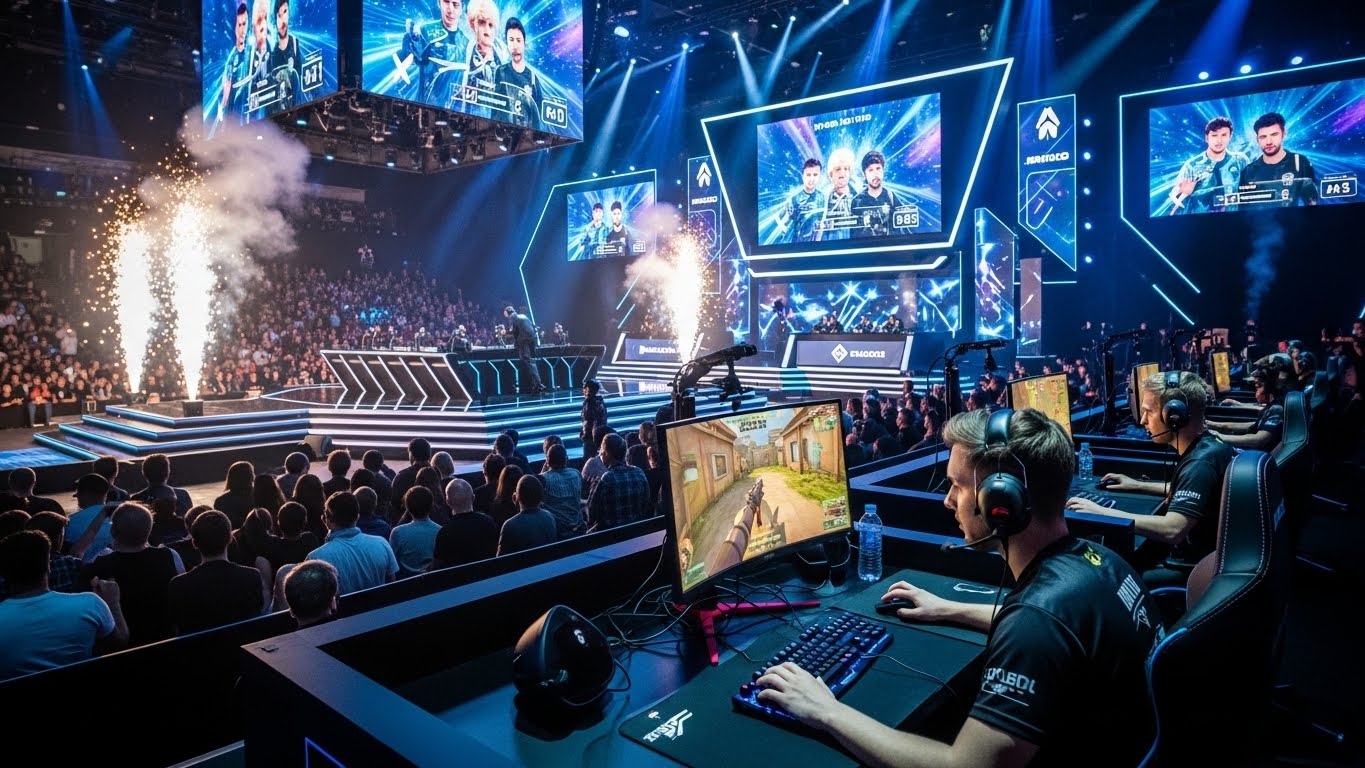
Introduction: A New Era of Competition
In the past, the concept of sports was limited to fields, courts, and stadiums. Athletes trained their bodies to achieve greatness through strength, speed, and endurance. But in the 21st century, a new kind of sport emerged — one where reflexes are measured in milliseconds, strategies unfold at the speed of thought, and competitors wield keyboards and mice instead of bats or balls. This is the world of esports, a digital revolution that has turned video gaming into a global competitive phenomenon.
Esports is more than just playing games; it’s a cultural shift, an entertainment industry, and a legitimate career path for millions around the globe. In this article, we’ll explore how esports evolved, its impact on society, the ecosystem supporting it, and what the future holds for this rapidly growing field.
The Origins of Esports: From Arcades to Arenas
The journey of esports began humbly. In the 1970s, when video games like Pong and Space Invaders captivated early gamers, competition was casual. Players gathered in arcades, striving to achieve the highest score. These early contests were the seeds of organized competitive gaming.
The first recognized esports event took place in 1972 at Stanford University, where students competed in a game called Spacewar!. The prize? A one-year subscription to Rolling Stone magazine. It was modest, but it marked the beginning of an era.
By the 1980s, gaming competitions grew with titles like Pac-Man, Donkey Kong, and Tetris. Arcade machines displayed high scores, and players became local legends. But the real transformation began in the 1990s with the rise of home consoles and PC gaming. Titles like Doom and Quake introduced multiplayer modes, allowing players to compete through local networks — the first version of what would later become online gaming.
The Internet Revolution and the Rise of Online Competitions
When the internet became mainstream in the late 1990s, the gaming landscape changed forever. Players no longer had to be in the same room to compete. Games like StarCraft, Counter-Strike, and Warcraft III pioneered online competitive play, giving birth to global tournaments and professional players.
The first organized esports leagues appeared in South Korea, where gaming became a cultural phenomenon. Televised matches and professional gaming teams emerged, supported by major corporations. Players trained rigorously, often living in team houses and following strict schedules. The world watched in awe as gaming began to resemble traditional sports in structure and dedication.
By the early 2000s, esports had begun to take shape as a legitimate industry. Online platforms enabled international competitions, and spectatorship grew as streaming technologies improved. The seeds planted in the arcades had now blossomed into global arenas filled with fans cheering for their favorite teams.
Popular Games That Defined Esports
Certain games have become the backbone of the esports industry, each contributing to its growth and diversity.
1. Counter-Strike: Global Offensive
A tactical first-person shooter that rewards precision, teamwork, and strategy. CS:GO became synonymous with competitive gaming, boasting tournaments with millions in prize pools.
2. League of Legends
This multiplayer online battle arena (MOBA) game revolutionized team-based competition. Developed by Riot Games, it built an ecosystem of leagues worldwide and a fanbase rivaling that of traditional sports.
3. Dota 2
Another MOBA title, Dota 2 is known for its complexity and strategic depth. Its annual tournament, The International, features some of the largest prize pools in esports history.
4. Fortnite
Combining battle royale gameplay with building mechanics, Fortnite redefined what an esport could look like. Its appeal to younger audiences helped bring gaming into mainstream pop culture.
5. Call of Duty and Overwatch
These first-person shooters expanded the competitive scene with franchise-based leagues, high production value, and global fan engagement.
Each of these titles has its own culture, heroes, and legacy, contributing to the multifaceted identity of esports as a whole.
Esports as a Career: Players, Streamers, and Beyond
The esports industry has opened doors to countless careers beyond professional gaming. Players are only one part of a vast ecosystem that includes coaches, analysts, event organizers, commentators, content creators, and even psychologists specializing in gamer performance.
Professional players often start young, some as early as their teens. They dedicate countless hours to training, developing hand-eye coordination, decision-making skills, and teamwork. The best players can earn salaries comparable to traditional athletes through prize winnings, sponsorships, and streaming revenue.
Streaming platforms such as Twitch and YouTube Gaming have also created new opportunities. Players can build personal brands and connect with fans directly, turning their passion for gaming into sustainable careers. Esports organizations invest heavily in branding, marketing, and fan engagement, transforming what was once a hobby into a billion-dollar entertainment sector.
The Global Impact of Esports
Esports has transcended cultural, geographical, and linguistic barriers. In countries like South Korea, China, and the United States, esports is viewed as a legitimate profession. Universities now offer esports scholarships, while governments recognize esports athletes as official competitors.
Major international tournaments attract audiences comparable to major sporting events. For instance, the League of Legends World Championship fills stadiums with tens of thousands of fans, while millions watch online. The production quality rivals that of the Super Bowl, with grand stages, music performances, and elaborate ceremonies.
Esports has also contributed to technological innovation. High-speed internet, better graphics hardware, and advanced streaming platforms evolved alongside gaming, driven by the demands of esports audiences.
The Psychology of Competitive Gaming
What makes esports players different from casual gamers? The answer lies in psychology. Esports athletes exhibit traits similar to traditional sports competitors: discipline, resilience, and the ability to perform under pressure.
Reaction time, focus, and mental agility are crucial in competitive gaming. Studies show that professional gamers process visual information faster than average individuals. Mental stamina is equally important — matches can last for hours, requiring sustained concentration and emotional control.
Coaches and sports psychologists play an essential role in helping players maintain peak performance. Teams invest in mindfulness training, nutrition, and even physical exercise to ensure their players’ well-being. The mind may be the most powerful weapon in esports, but it requires care and balance to remain sharp.
The Role of Technology in Esports Growth
Without technological advancement, esports wouldn’t exist. Every aspect of competitive gaming relies on technology — from high-speed internet connections and low-latency servers to powerful graphics cards and high-refresh monitors.
Virtual reality (VR) and augmented reality (AR) are also shaping the future of esports. These technologies promise more immersive experiences, where physical and digital boundaries blur. Artificial intelligence (AI) assists in game analytics, providing insights into player performance and strategy.
Furthermore, broadcasting technology has turned esports into a global spectacle. Fans can watch live matches, engage in real-time chats, and even participate in virtual viewing parties. The ability to connect instantly with millions of viewers has elevated esports from niche entertainment to mainstream recognition.
Economic Power: The Billion-Dollar Industry
Esports has evolved into a massive economic powerhouse. Revenue streams come from sponsorships, merchandise, ticket sales, advertising, and media rights. Major corporations such as Intel, Coca-Cola, and automobile brands sponsor tournaments, recognizing esports’ marketing potential among younger audiences.
Prize pools have skyrocketed over the years. Dota 2’s The International regularly exceeds $30 million, and other tournaments are not far behind. Esports organizations operate like professional sports franchises, signing players, building fanbases, and competing for global dominance.
The ecosystem also extends to game developers, streaming platforms, and event management companies. Cities now host esports arenas, and major universities invest in esports programs. This interconnected web of businesses ensures that esports continues to thrive economically.
Education and Esports: A New Frontier
As esports gained legitimacy, educational institutions began integrating it into their systems. Universities around the world now offer degrees in esports management, game design, and digital media. These programs prepare students for careers not only as players but also as coaches, producers, marketers, and business professionals.
High schools and colleges organize esports teams, fostering teamwork, strategic thinking, and leadership among students. Scholarships for esports players are now as real as those for football or basketball athletes. This educational shift demonstrates how deeply gaming has embedded itself in modern culture.
Challenges Facing the Esports Industry
Despite its success, esports faces challenges that must be addressed for sustainable growth.
1. Player Burnout
Intense training schedules and high-pressure environments can lead to mental and physical exhaustion. The average professional player’s career span is often short due to the demanding nature of competition.
2. Regulation and Governance
Unlike traditional sports, esports lacks a unified global governing body. This absence leads to inconsistent rules, disputes over contracts, and issues with match-fixing or doping.
3. Inclusivity and Diversity
While esports has made strides toward inclusivity, gender imbalance and toxic behavior in online communities remain concerns. Efforts are ongoing to create safer and more welcoming environments for all players.
4. Financial Stability
While top teams earn millions, many smaller organizations struggle financially. Maintaining a balance between profitability and accessibility is key to long-term success.
Cultural Influence: From Subculture to Mainstream
Esports is no longer a niche interest; it’s a dominant force in pop culture. Celebrities, musicians, and athletes invest in teams and participate in gaming events. Mainstream media now covers esports tournaments, and video games inspire fashion lines, music tracks, and TV shows.
The image of the “gamer” has transformed. Once seen as a solitary hobbyist, today’s gamer is a social, connected individual, part of a global community. Esports has redefined entertainment by merging gaming, media, and celebrity culture into one dynamic ecosystem.
The Future of Esports: What Lies Ahead
The future of esports is bright and filled with possibilities. Advancements in technology will continue to enhance gameplay and viewer experience. Cloud gaming, AI-driven analytics, and virtual environments will make competitions more accessible and interactive.
Esports could also become an Olympic event in the near future. The International Olympic Committee has already recognized competitive gaming as a potential discipline, and pilot events have been held.
In the coming years, we may see deeper integration between esports and traditional sports. Partnerships with leagues like the NBA and FIFA have already begun. The boundary between physical and digital competition continues to blur, creating a new hybrid world of sport.
Conclusion: The Game That Changed the World
Esports has proven that competition isn’t limited to physical arenas. It has shown that skill, strategy, and passion can transcend traditional boundaries, uniting millions of people through a shared love for gaming. What began as a pastime in arcades has evolved into a professional, global industry shaping the future of entertainment and sports alike.
The story of esports is one of innovation, community, and relentless ambition. It’s a testament to how technology can bring people together, challenge perceptions, and create new forms of expression. Whether you’re a casual gamer, a dedicated fan, or simply curious about this digital revolution, one thing is clear — esports isn’t the future anymore. It’s the present.
And in this digital arena, the competition has only just begun.