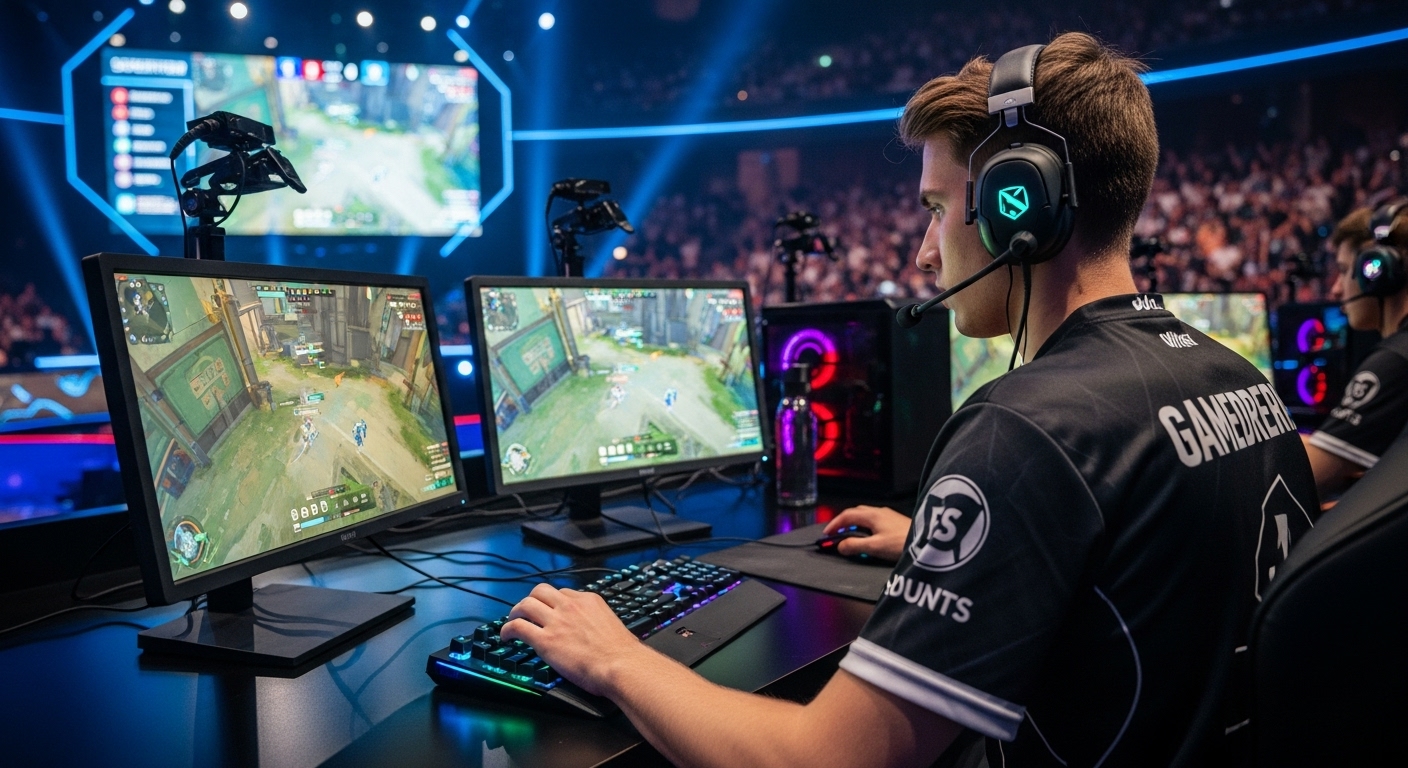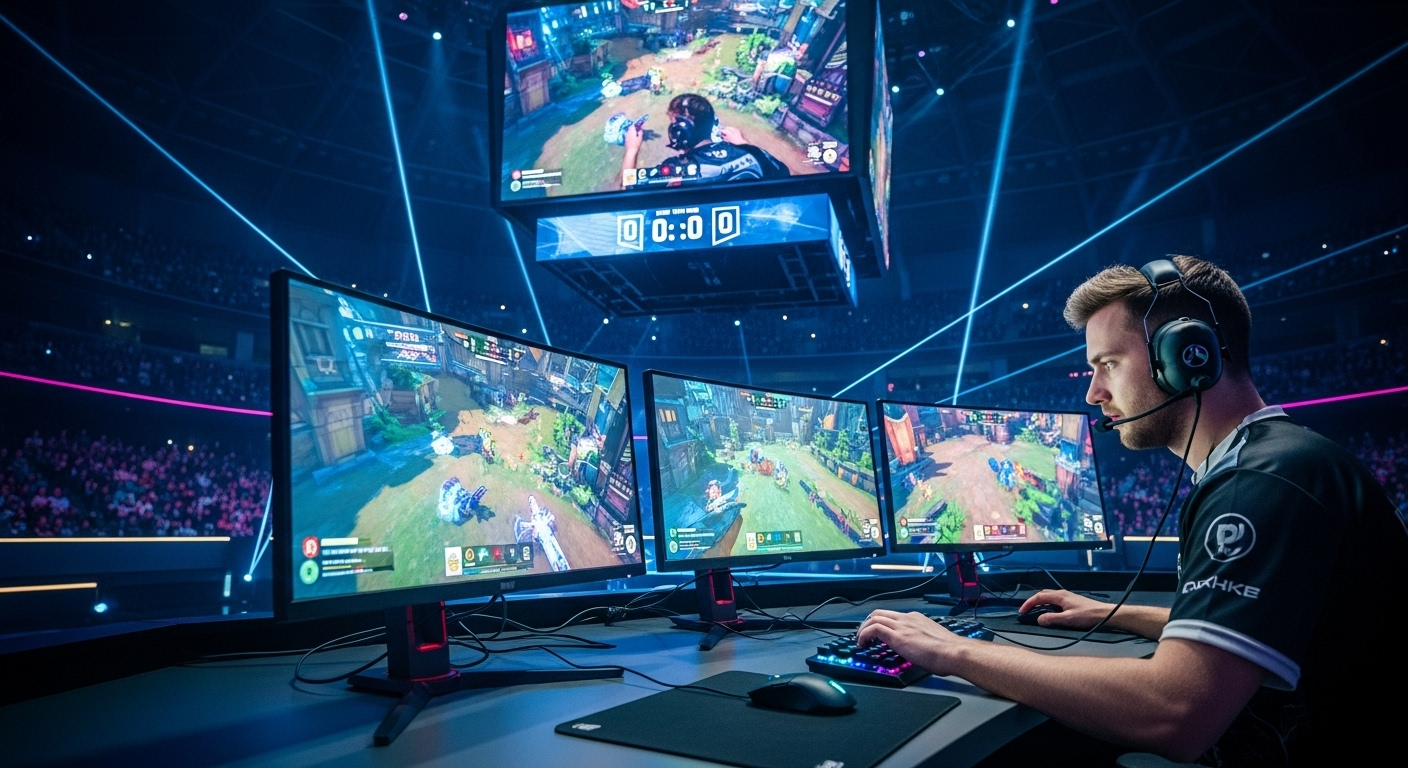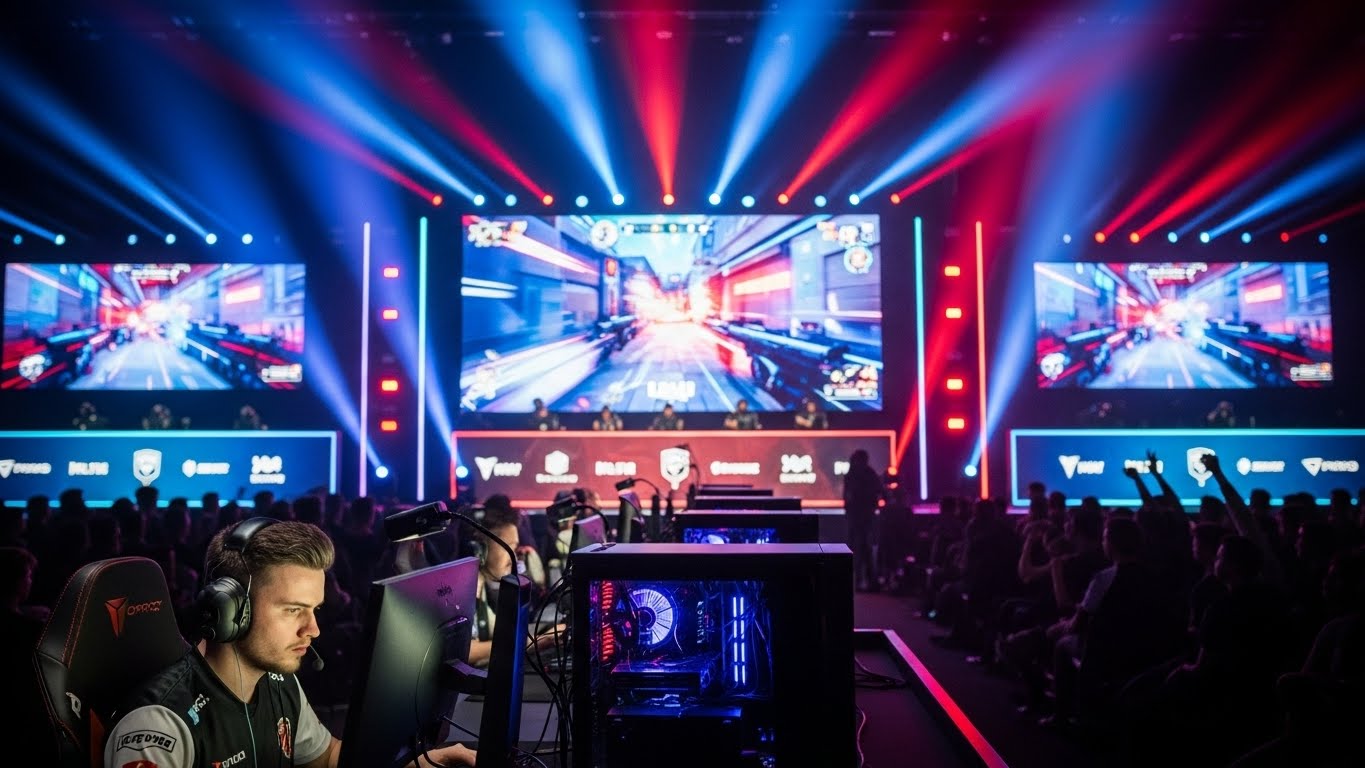
In just a few decades, esports has transformed from a niche hobby into a multi-billion-dollar global industry, captivating millions of viewers, players, and sponsors worldwide. What once seemed like a small subculture has expanded into a mainstream phenomenon that combines skill, strategy, and entertainment. Today, esports isn’t just about playing video games—it’s a competitive arena, a form of entertainment, and an industry that has found its place in the cultural zeitgeist.
In this blog post, we’ll dive deep into the world of esports, tracing its roots, understanding its rapid growth, and exploring its impact on entertainment, culture, and business. By the end, you’ll not only gain a deeper understanding of the esports phenomenon but also why it’s likely to continue evolving for years to come.
The Beginnings of Esports: A New Form of Competition
The foundation for modern esports was laid in the late 20th century, when video games started to gain mass appeal. In the early days, gaming was primarily a solitary activity. Gamers would play single-player games on home consoles or arcade machines, and social interaction happened in person at local arcades. However, the idea of competitive gaming—where players could challenge one another for supremacy—began to take root in the 1980s.
One of the first landmark events in competitive gaming was the Space Invaders Championship in 1980, hosted by Atari. While the event was relatively small compared to today’s standards, it marked the beginning of organized competitions around video games. Over the next decade, events like the Nintendo World Championships and the Red Annihilation Tournament in the late 1990s began to take shape, providing early platforms for professional gamers.
But it wasn’t until the internet revolution of the late 1990s and early 2000s that esports truly started to take off. Games like StarCraft, Quake, and Warcraft III allowed players to connect online and compete in global tournaments. These games introduced the concept of online multiplayer gaming, where players could battle each other in real-time over the internet, a feature that laid the groundwork for what we now recognize as professional esports.
The Explosive Growth of Esports: From Niche to Mainstream
The true turning point for esports came in the 2010s, when it made the jump from being a niche hobby to a mainstream entertainment industry. The explosive growth of streaming platforms like Twitch in 2011 played a crucial role in this transformation. Twitch gave gamers a platform not only to play but to broadcast their skills to a global audience. Viewers could now tune into live streams, watch tournaments in real-time, and interact with players via chat.
In addition to Twitch, YouTube became another pivotal platform where esports content could thrive. The accessibility of these platforms allowed players to build large followings, and esports personalities—like Ninja (Tyler Blevins) and Shroud (Michael Grzesiek)—transformed from casual gamers into internationally recognized stars. This change in how esports was consumed shifted the perception of gaming, moving it from an isolated activity to a vibrant, community-driven experience.
The increase in streaming and social media exposure also attracted major corporate sponsorships, cementing esports as a legitimate industry. Multinational brands like Coca-Cola, Intel, Razer, and Nike began to invest heavily in esports, sponsoring teams, tournaments, and even individual streamers. This influx of corporate sponsorship not only provided much-needed financial backing but also elevated the professionalism of the esports ecosystem.
The Structure of Esports: Players, Teams, and Tournaments
Esports may have started as individual players competing in small tournaments, but today it’s a sophisticated ecosystem involving players, teams, coaches, analysts, and organizers. Let’s break down the main components of the modern esports industry:
1. Players and Streamers
At the heart of esports are the players. These athletes are often highly skilled individuals who dedicate hours of training and practice to hone their craft. While some players rise through the ranks in grassroots tournaments, many of the top professional players are recruited by established esports organizations. These players specialize in specific games—such as League of Legends, Counter-Strike: Global Offensive, Dota 2, or Fortnite—and compete in regional or international competitions.
In addition to professional players, there are also streamers—individuals who broadcast themselves playing games online. While not always competitive in the traditional sense, streamers have played a huge role in expanding the reach of esports. Through platforms like Twitch and YouTube, streamers have created a personal connection with millions of fans, often interacting with viewers and showcasing their gaming skills.
2. Esports Teams and Organizations
Just as in traditional sports, esports has evolved to include team-based competitions. Esports teams consist of a group of players, typically managed by an organization, who compete together in tournaments. These organizations recruit top players from across the globe, provide them with training, coaching, and support staff, and guide them through their professional careers.
Organizations like Cloud9, Team Liquid, FaZe Clan, and G2 Esports have become some of the most well-known names in esports, with millions of fans worldwide. These teams are not only focused on in-game performance but also building a brand, creating content, and engaging with their community. Their success in competitions, paired with their social media presence, has helped elevate esports into a cultural movement.
3. Esports Tournaments and Leagues
Tournaments and leagues are the backbone of the esports world. Major tournaments like The International (Dota 2), the League of Legends World Championship, and EVO (for fighting games) are not just events but spectacles, drawing in millions of viewers from around the globe. These competitions offer substantial prize pools, sometimes reaching millions of dollars, and attract top-tier players who compete for fame and fortune.
In addition to standalone tournaments, there are also esports leagues that mirror traditional sports leagues. For instance, the Overwatch League and the Call of Duty League feature franchises with teams representing cities or regions, similar to professional sports leagues like the NBA or NFL. These leagues follow a regular-season format, culminating in playoffs and championships, and provide a year-round competitive structure for players and fans.
The rise of these leagues has also led to increased media coverage, with esports tournaments being broadcasted on television networks like ESPN and TBS. This further legitimizes esports as a mainstream entertainment medium, allowing it to reach audiences outside the gaming community.
The Economic Impact of Esports: A Billion-Dollar Industry
Esports has quickly become a multi-billion-dollar industry, with revenue generated through various channels, including sponsorships, advertising, ticket sales, merchandising, and streaming. According to industry reports, esports revenue was expected to surpass $1.5 billion in 2023, with a large portion coming from sponsorship deals with major brands.
The esports ecosystem has also provided numerous career opportunities for individuals with various skill sets. In addition to professional players, there are careers in game design, event production, broadcasting, marketing, coaching, content creation, and more. Esports has created an entirely new job market, allowing people to turn their passion for gaming into a legitimate career.
One of the key factors contributing to esports’ economic success is its global audience. Unlike traditional sports, which often rely on a specific region or country for their fanbase, esports transcends geographic boundaries. A League of Legends World Championship can attract viewers from every corner of the globe, with broadcasts in multiple languages to cater to international audiences. This global reach has made esports an attractive avenue for brands looking to tap into new and diverse consumer markets.
The Cultural Influence of Esports
Esports has grown far beyond the realm of gaming and now plays a significant role in shaping modern culture. One of the most notable aspects of this cultural shift is the rise of esports as a form of entertainment. Major tournaments are now broadcast in stadiums, with thousands of fans attending live events, and the viewing experience has become comparable to attending a traditional sports game.
Esports has also become a key component of youth culture. Competitive gaming is now widely accepted as a legitimate activity, and young people aspire to become professional players just as much as they might dream of becoming athletes or musicians. The rise of esports also coincides with the growth of gaming influencers, who have become cultural icons, collaborating with mainstream celebrities, brands, and even fashion houses.
Furthermore, esports is helping to shape gender norms and diversity in gaming. While the gaming community has traditionally been male-dominated, women are increasingly participating and excelling in esports. Female gamers and influencers like Sasha “Scarlett” Hostyn and Imane “Pokimane” Anys have gained significant recognition, breaking barriers and inspiring the next generation of players.
The Future of Esports: Challenges and Opportunities
While the esports industry continues to flourish, it faces a number of challenges that will need to be addressed in order to ensure long-term sustainability.
One major concern is the health and well-being of professional players. The intense training schedules, long hours in front of screens, and high levels of competition can lead to burnout, physical injuries like carpal tunnel syndrome, and mental health challenges. As the industry matures, it will be important for organizations to prioritize player welfare and establish systems for support.
Another challenge is cheating and match-fixing, which have plagued both traditional and esports competitions. The presence of high-stakes prize money in some tournaments has led to unethical practices. Esports organizations and governing bodies must continue to strengthen anti-cheating protocols and ensure fair competition.